

 English
 中文简体
中文简体 Español
How Can You Tell If a Rocking Chair Is Truly Safe and Sturdy Enough to Use Daily?
May 08, 2026Content
- 1 Why Safety and Sturdiness Evaluation Matters Before Purchasing a Rocking Chair
- 2 Evaluating the Frame Material and Construction Quality
- 3 Inspecting Joints and Connection Points
- 4 Assessing Rocker Blade Geometry and Ground Contact
- 5 Checking Weight Capacity Ratings and Load Testing
- 6 Key Safety Indicators: A Practical Checklist
- 7 Identifying Signs of Wear and Deterioration in Existing Chairs
- 8 Special Considerations for Nursery and Elderly User Rocking Chairs
- 9 When to Repair and When to Replace a Rocking Chair
Why Safety and Sturdiness Evaluation Matters Before Purchasing a Rocking Chair
A rocking chair is not a static piece of furniture. Unlike a dining chair or a bench, it is in constant motion during use — transferring dynamic forces through its joints, rockers, and frame with every arc of movement. This continuous mechanical loading means that structural weaknesses that might go unnoticed in a stationary chair can rapidly propagate into serious failures in a rocking chair, with consequences ranging from a gradually worsening wobble to a sudden, complete collapse that causes injury. For elderly users, nursing mothers, individuals recovering from injury, or anyone who uses a rocking chair as a primary relaxation or feeding chair, a structural failure is not merely inconvenient — it is a genuine safety risk.
Despite this, many buyers evaluate rocking chairs primarily on aesthetics, price, and comfort — giving little systematic attention to the structural indicators that predict whether the chair will remain safe and stable through years of regular use. This article provides a practical, detailed framework for assessing the safety and sturdiness of any rocking chair, whether you are evaluating a new purchase in a showroom, buying secondhand, or inspecting a chair you already own for signs of wear or deterioration.
Evaluating the Frame Material and Construction Quality
The frame is the structural backbone of any rocking chair, and its material, grade, and construction method determine the fundamental ceiling on the chair's long-term strength and stability. Not all materials labeled the same are equal in quality — there is significant variation in density, grain quality, and structural integrity within wood species, and similar variation in alloy grade and wall thickness within metal-framed chairs.
Solid Wood Frames
Solid hardwood — oak, maple, walnut, ash, or teak — is the traditional and most structurally reliable material for rocking chair frames. Hardwoods have dense, interlocked grain structures that resist splitting under repeated cyclical loading, accept joint hardware firmly, and respond well to gluing, giving them mechanical advantages that softwoods and engineered wood products cannot match in demanding furniture applications. When evaluating a solid wood rocking chair, inspect the grain direction on the legs, posts, and rocker blades: straight, consistent grain running parallel to the length of each member is desirable, while wild, cross, or heavily knotted grain indicates structural weakness at that point. Knock gently on the seat rails and back posts — a solid, dense sound indicates good-quality wood, while a hollow or dull thud may suggest low-density wood or internal defects. Check that the chair is made from a single species throughout, as mixing wood species with different expansion coefficients can cause joint stress over time as the woods respond differently to humidity changes.
Engineered Wood and MDF Frames
Medium-density fiberboard (MDF), particleboard, and low-grade plywood are occasionally used in budget rocking chairs to reduce manufacturing cost. These materials are significantly less suitable for rocking chair construction than solid hardwood because they have poor resistance to cyclical loading, limited screw-holding capacity, and a tendency to swell, delaminate, or crumble when exposed to the moisture variations typical in home environments over time. An MDF-framed rocking chair may feel solid when new but will almost inevitably develop joint looseness and structural instability within a few years of regular use. Identify engineered wood by looking at any unfinished surface — particleboard shows a granular, uniform cross-section, MDF shows a smooth, featureless cross-section, while solid wood shows visible grain lines and annual ring patterns.
Metal Frames
Steel and aluminum rocking chairs — common in outdoor and contemporary designs — should be evaluated for wall thickness, weld quality, and corrosion protection. Thick-walled steel tubing (minimum 1.5mm wall thickness for structural members) will resist deformation under load, while thin-walled tubing will flex, fatigue, and eventually crack at stress concentration points such as bends and weld zones. Examine all welds: clean, continuous, fully penetrating welds with smooth profiles indicate quality fabrication, while porous, spatter-heavy, or incomplete welds suggest poor welding practice and reduced joint strength. For outdoor metal chairs, check that the finish is powder-coated or galvanized rather than merely painted, as bare paint provides inadequate long-term corrosion protection and rust in structural members is a serious safety concern.
Inspecting Joints and Connection Points
In any chair, joints are the structural weak points — the locations where individual components meet and transfer load between one another. In a rocking chair, joints experience not only the static weight of the occupant but also the dynamic, cyclical forces generated by the rocking motion itself, making joint quality an even more critical safety determinant than in stationary furniture. A systematic inspection of the chair's joint types and current condition is one of the most valuable steps in any safety evaluation.
The primary joint types used in quality wooden rocking chairs include:
- Mortise and tenon joints: The gold standard for chair joinery, where a projecting tenon on one member fits precisely into a corresponding mortise cavity in another. When properly cut, fitted, and glued, mortise and tenon joints distribute load over a large glue surface and resist both tension and racking forces effectively.
- Dowel joints: Cylindrical wooden dowels inserted into aligned holes in both mating surfaces. Less mechanically strong than mortise and tenon when subjected to racking forces, but acceptable in well-made chairs where dowels are properly sized, fully glued, and supported by additional structural members.
- Screw and bolt connections: Metal fasteners used alone or in combination with glue. Screws into solid hardwood provide good shear resistance but limited pull-out strength; bolts with through-holes and nuts provide the most secure mechanical connection and are appropriate for high-stress joints such as the rocker-to-leg attachment.
- Corner block reinforcements: Triangular wood or metal blocks glued and screwed into the inside corners of seat rail joints, adding significant racking resistance to what would otherwise be a purely adhesive connection.
To test joint integrity physically, apply gentle but firm lateral pressure to the back posts, then to the seat from side to side, and finally attempt a very slight racking motion by pressing opposing corners of the seat frame down alternately. Any audible creaking, visible movement at joint lines, or detectable play between components indicates loosened or deteriorating joints that require attention before the chair is safe for regular use.
Assessing Rocker Blade Geometry and Ground Contact
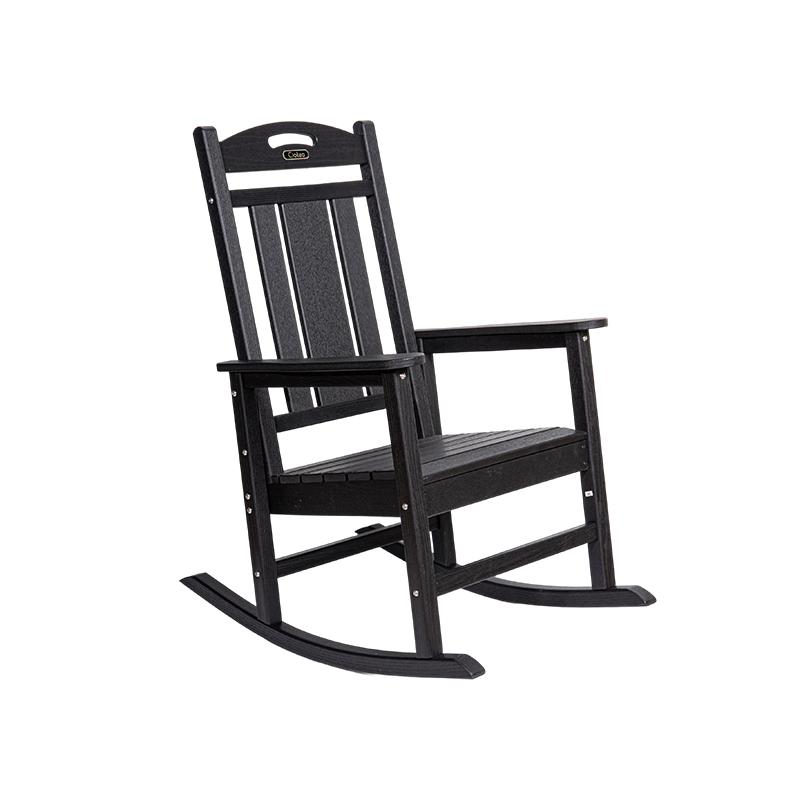
The rocker blades — the curved runners on which the chair rocks — are unique to this furniture type and introduce specific safety considerations that do not apply to any other chair category. The geometry of the rocker blades directly determines the chair's stability envelope, its tipping resistance, and the smoothness and predictability of its rocking motion. Incorrect rocker geometry is one of the leading causes of rocking chair tip-over accidents and is a critical safety factor that is frequently overlooked by buyers.
Rocker Length and Arc Radius
Longer rocker blades that extend well forward and rearward of the seat provide a larger stability footprint and reduce tip-over risk at the extremes of the rocking arc. Short rocker blades that barely extend beyond the chair legs are a red flag — they limit the self-correcting geometry of the chair and increase the risk of tipping backward when the occupant pushes too vigorously. As a practical guideline, the front tip of the rocker blades should extend at least 30–40cm forward of the front legs, and the rear tip should extend at least 25–30cm behind the back legs for a standard adult rocking chair. The arc radius — the radius of curvature of the rocker blade — should be consistent along the full length of each blade and matched between the left and right blades: mismatched arcs cause the chair to drift sideways during rocking, creating lateral instability.
Ground Contact and Floor Flatness
Place the rocking chair on a flat, hard surface and observe the ground contact of both rocker blades simultaneously. Both blades should contact the floor across their full width at the same point in the rocking cycle, with no tendency for one side to lift while the other bears load. Sit in the chair and rock gently — the motion should feel symmetrical, smooth, and self-centering, returning naturally to the rest position without drifting left or right. Any asymmetry in ground contact, tendency to drift sideways, or roughness in the rocking arc indicates a geometry defect in the rocker blades that will cause uneven wear and potentially worsen over time.
Checking Weight Capacity Ratings and Load Testing
Every structurally responsible rocking chair should carry a clearly stated maximum weight capacity, either on a label attached to the chair or in the product documentation. This rating reflects the maximum static load the chair has been designed and tested to support safely — it does not account for the additional dynamic forces generated by active rocking, which can significantly exceed the static weight of the occupant depending on the vigor of the rocking motion. As a practical safety margin, users should select chairs rated for at least 25–30% more than their actual body weight to ensure adequate structural reserve for dynamic loading conditions.
For chairs where no weight capacity is stated — common in antique, vintage, or informally manufactured pieces — apply the following physical tests to make a conservative judgment about structural adequacy:
- Press firmly down on the center of the seat with both hands, applying approximately your full body weight through your arms, and observe whether any joint movement, creaking, or frame flex occurs
- Apply lateral force to the top of the back rest to test racking resistance — the frame should feel solid and show no detectable movement at any joint
- Sit in the chair and rock with gradually increasing vigor, stopping immediately if any unusual sound, movement, or instability is detected
- Check all visible joints immediately after the load test for any fresh splitting, glue separation, or fastener movement that may have been initiated or revealed by the applied load
Key Safety Indicators: A Practical Checklist
The following table summarizes the most important safety and sturdiness indicators to evaluate when assessing any rocking chair, along with what each finding means for the chair's suitability for use:
| Inspection Point | Pass Indicator | Fail Indicator |
| Frame Material | Solid hardwood or thick-wall steel | MDF, particleboard, thin-wall tubing |
| Joint Integrity | No movement, creak, or play under load | Audible creaking, visible gap, detectable movement |
| Rocker Blade Length | Extends 30cm+ fore and 25cm+ aft of legs | Short blades barely beyond the legs |
| Rocking Motion Symmetry | Smooth, centered, no lateral drift | Drifts sideways, rough, or uneven arc |
| Weight Capacity Label | Clearly stated, exceeds user weight by 25%+ | No rating stated, or rating close to user weight |
| Surface Finish Condition | Even, uncracked, no exposed bare wood at joints | Cracked finish at joints, rust staining, bare wood |
| Glue Line Visibility | Tight, hairline joint lines throughout | Visible gaps, glue failure, separated joints |
Identifying Signs of Wear and Deterioration in Existing Chairs
For rocking chairs already in use — particularly antique, inherited, or secondhand pieces — a periodic structural inspection is an important safety maintenance practice that most owners neglect until a problem becomes obvious. The following are the most diagnostically significant signs of structural deterioration to look for during an inspection of an existing chair:
- Cracked or split wood at joint regions: Cracks radiating from mortises, tenon shoulders, or dowel holes indicate that the joint has been stressed beyond the wood's capacity, likely due to joint looseness allowing excessive movement. These cracks will propagate with continued use and represent an active structural failure requiring immediate repair.
- Visible glue failure at joint lines: A gap appearing at what was previously a tight glue joint indicates adhesive failure, which dramatically reduces joint strength even if the pieces are still in contact. Re-gluing with appropriate furniture adhesive is required before the chair is safe to use.
- Worn rocker blade surfaces: The contact surface of rocker blades wears with use, gradually flattening the arc. Heavily worn rockers lose their self-centering geometry, increasing tip-over risk and creating an uneven, unpredictable rocking motion. Blade wear beyond 3–4mm at the contact surface warrants professional assessment.
- Loose or missing fasteners: Screws that turn freely without gripping, bolts that have worked loose, or fastener holes that have become enlarged all represent reductions in joint clamping force. Loose fasteners should be replaced with larger-diameter or longer equivalents, or the holes should be filled and redrilled for fresh purchase.
- Rust at metal connections or hardware: Surface rust on decorative hardware is primarily aesthetic, but rust on structural bolts, leg brackets, or metal reinforcing plates indicates active corrosion that may be compromising the cross-section and load capacity of the fastener.
Special Considerations for Nursery and Elderly User Rocking Chairs
The safety standards applicable to rocking chairs intended for use in nurseries — where parents rock infants and young children — or by elderly users are more stringent than for general adult use, and several additional factors deserve specific attention in these contexts.
For nursery rocking chairs, the primary additional concern is entrapment risk. Gaps between spindles, between the seat and rocker blades, or between any structural components should be either less than 60mm (to prevent a small head from entering) or more than 90mm (to allow free passage without entrapment). Any gap in the 60–90mm range is a potential head entrapment hazard for infants and young children and should disqualify the chair from nursery use regardless of its structural quality. Additionally, the chair should have no protruding hardware, sharp edges, or pinch points that could injure an infant held in the occupant's arms during rocking.
For elderly users, stability and ease of ingress and egress are the paramount safety considerations. The chair should have a seat height that allows the user to plant their feet flat on the floor during rocking — a seat too high will cause the user to perch precariously, while a seat too low makes standing difficult. Armrests should be at an appropriate height and depth to provide genuine push-off support when the user rises from the chair. The rocking arc should be moderate rather than deep — a very aggressive rocking motion increases the physical effort required to control the chair and raises the tip-over risk for users with limited lower body strength or balance. Anti-tip devices — small rubber stops that limit the rearward arc of the rocker blades — are a worthwhile safety addition for any rocking chair used by elderly or mobility-impaired individuals.
When to Repair and When to Replace a Rocking Chair
Not every structural issue discovered during a rocking chair inspection warrants replacement. Many common problems — loose joints, failed glue lines, worn rocker surfaces, loose fasteners — are entirely repairable by a competent furniture restorer or a skilled DIY practitioner, and addressing them promptly can restore a deteriorating chair to full structural safety and extend its useful life by many additional years. Quality solid hardwood rocking chairs, in particular, are worth repairing because their fundamental structural integrity — good wood, sound mortise and tenon joinery, well-matched rocker geometry — remains sound even when the adhesive or fasteners have aged.
Replacement is the appropriate response when the structural problems are fundamental rather than superficial: cracked or split primary frame members that compromise load-bearing capacity, severely deteriorated engineered wood that has lost its mechanical integrity, extensively corroded metal structural members where section loss is significant, or rocker blade geometry that is so worn or mismatched that safe function cannot be restored through surface treatment alone. In these cases, continued use of the chair after repair would provide only false assurance of safety, and the more responsible choice — particularly for nursery or elderly user applications — is to invest in a new chair built to current safety standards with clearly stated weight ratings and tested structural specifications.
Contact Us
Your email address will not be published. Required field are marked*
Categories
- Company News(1)
- Industry News(47)
Product Category

Professional Furniture Manufacturing

Zhejiang Xinyike New Material Technology Co.,Ltd is a combination of industry and trade, specializing in the production and processing of PE foam furniture and PVC foam flooring. Modern HDPE Outdoor Furniture Manufacturers in China.

- [email protected]
- +86-13511235540 /13732381238
- F/5, Factory Building 3, Xiaquan Industrial Park, Lingfeng Street, Anji Country, Huzhou City, Zhejiang Province(within Zhejiang Anji Changran Logistics Technology Co., Ltd.)
