Industry Knowledge
HDPE profile design: thickness, ribbing and long-term stiffness
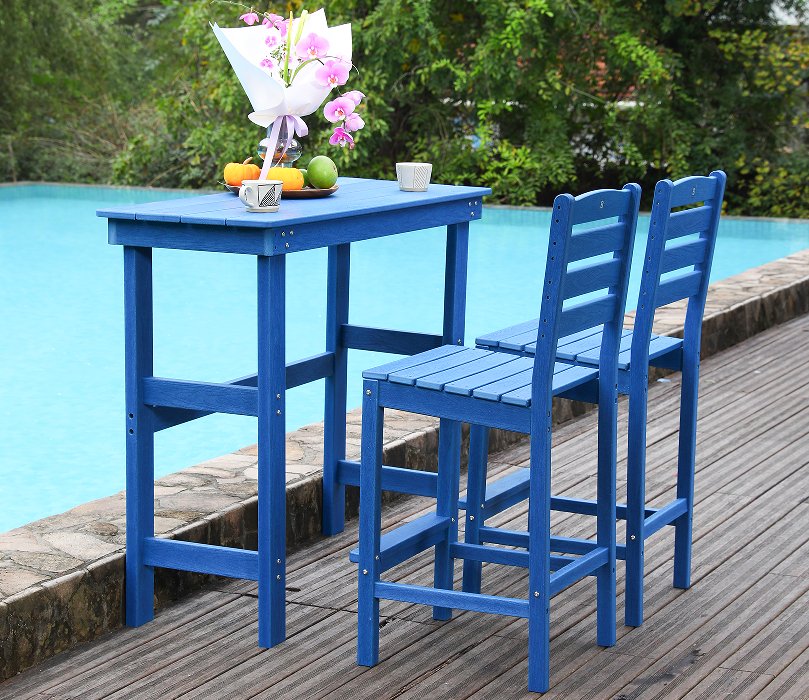
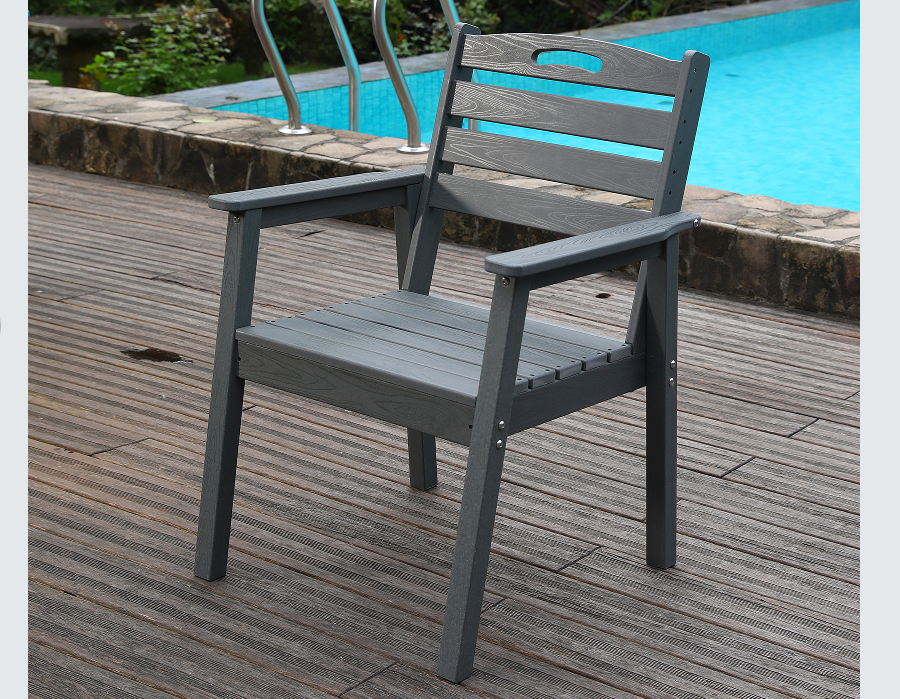
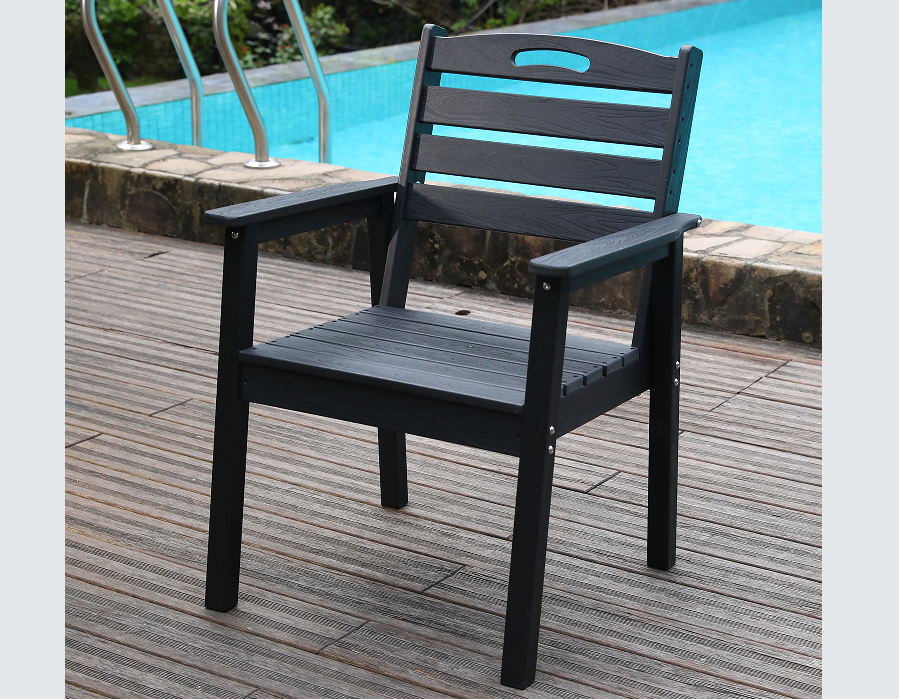
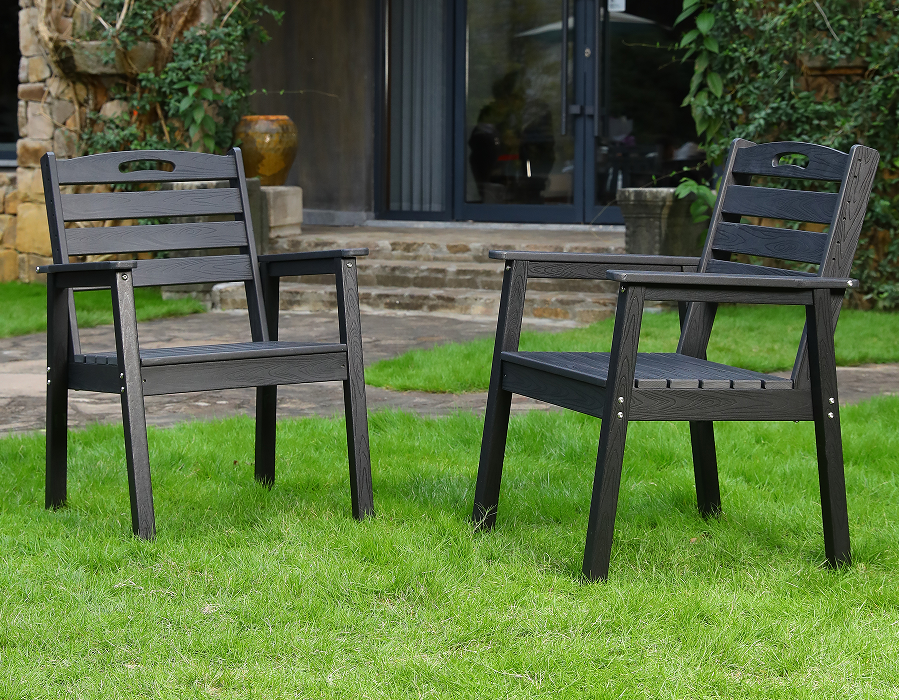
When specifying HDPE components for HDPE outdoor dining tables and chairs, patio dining set's thickness and internal geometry matter more than brand names. Typical solid HDPE slats for commercial seating range from 10–25 mm; thinner sections reduce stiffness and increase deflection under load. To achieve high stiffness without excessive material weight, manufacturers use hollow profiles with internal ribbing or multi-chamber extrusions. These ribs increase moment of inertia and dramatically reduce sagging over time. For heavy-duty restaurant chairs we commonly specify reinforced rails or a minimum nominal wall thickness equivalent to a 12–15 mm solid board to maintain seat stability across years of service.
UV stabilization, colourfastness and pigment strategy
HDPE exposed to sunlight must be compounded with UV stabilizers and light stabilizers to prevent chalking and colour fade. The practical targets are:
- Use of hindered amine light stabilizers (HALS) plus UV absorbers — together they extend outdoor colour life dramatically.
- High pigment load and color-through formulation (not surface coated) so scratches remain less visible and colour persists through abrasion.
- Target colour fade specifications: ΔE ≤ 3 after 1000 hours of QUV is a practical acceptance benchmark for premium outdoor dining furniture.
As a factory focused on top-end markets, we control pigment batches and stabilization packages to ensure consistent lot-to-lot performance.
Frame selection and fastener best practices
HDPE components are normally mounted to metal frames — the metal choice and fastener type determine corrosion performance and life expectancy. Recommended pairings:
- Aluminium frames (6061-T6 or 6063): lightweight, non-ferrous — ideal for coastal settings when anodized or powder coated properly.
- Stainless steel: use AISI 316 for marine/coastal environments; AISI 304 is acceptable for inland use where chlorides are limited.
- Fasteners: A2 (304) stainless for general use; A4 (316) stainless for coastal. Avoid mixed-metal contact that can accelerate galvanic corrosion — insulate with nylon washers or polymer sleeve inserts where metal meets HDPE.
Joining methods: mechanical versus welded options
HDPE parts are usually attached using mechanical fixings; chemical bonding is rarely reliable for structural applications. Two common strategies work well:
- Through-bolting with oversized holes and polymer washers to allow thermal expansion without stress concentration.
- Structural frames where HDPE slides or clips into purpose-designed extrusions — these reduce visible fasteners and simplify replacement.
We offer custom bracket geometries and pre-drilled kits so installers get repeatable fastener locations and correct tolerances on site.
Drainage, water management and mould prevention
Design details that prevent standing water will reduce mildew on cushions and bacterial growth under tabletops. Practical solutions include:
- Slight bevels and 2–3° table top slope toward concealed drainage channels.
- Perforated or slatted HDPE seating surfaces to let rain pass through and air-dry quickly.
- Quick-dry foam cushions with water-resistant covers and drainage holes in cushion cores for hospitality settings.
Cleaning, stain removal and on-site maintenance
Routine cleaning extends appearance life and prevents buildup. Practical maintenance steps:
- Daily wipe with mild soap and water; soft brush for textured surfaces.
- For grease or food stains use a 1:10 bleach solution or household degreaser; rinse thoroughly to avoid residue.
- Avoid aggressive solvents (acetone, methylene chloride) that swell or craze HDPE.
Salt-spray, weather testing and quality checkpoints
Commercial outdoor furniture should pass a series of production and acceptance tests. Recommended checkpoints:
- Salt spray (ASTM B117) on metal frames or fasteners — choose required hours based on end market (e.g., 240–1000 hours for coastal hospitality).
- UV QUV accelerated weathering for HDPE colour stability (e.g., 1000–2000 hours for premium grade).
- Static load and cycle testing for outdoor dining Chairs — 1100 N seat load repeated cycles to simulate commercial use.
We maintain inspection records and provide test reports to buyers so product acceptance is transparent and traceable.
Customization options that matter to designers and hotels
Beyond colours and finishes, meaningful custom features include:
- Tool-less replaceable slats — simplifies repairs and reduces lifetime cost of ownership.
- Integrated umbrella anchors with reinforcement sleeves sized for common commercial parasols.
- Hidden drainage channels and customer-specified table overhangs for service ergonomics.
We supply custom outdoor HDPE dining chairs to suit specific stack heights, branded embossing, and alternative colour formulas for design-led projects.
Practical packing, shipping and on-site assembly tips
Damage in transit commonly arises from vibration, point loading and moisture. Minimise risk by:
- Nest and stack chairs with protective interleaving to avoid surface abrasion.
- Use corner blocks and cross bracing in cartons to prevent compression damage for tabletops.
- Send a simple torque chart for all assembly fasteners so installers do not over-torque into HDPE and cause stress cracking.
Comparative quick-reference: common frame materials
| Material |
Corrosion Resistance |
Recommended Use |
Maintenance |
| Aluminium (anodized / powder) |
High (non-ferrous) |
Residential & commercial terraces; coastal with proper finish |
Wash periodically; touch up powder coat chips |
| Stainless Steel 304 |
Good (inland) |
Urban/outdoor dining away from seawater |
Clean regularly; avoid chloride exposure |
| Stainless Steel 316 |
Excellent (marine) |
Coastal resorts, beachside restaurants |
Periodic rinse; inspect welds and fasteners |
| Galvanized Steel |
Moderate (depends on coating) |
Cost-sensitive commercial projects with protective coatings |
Inspect for coating damage; recoat as needed |
Design considerations for wind and uplift
Outdoor dining tables with large umbrella holes and wide tops can act as sails. For safety and regulatory compliance in commercial outdoor areas, consider:
- Providing anchorage points or ballast options for lightweight tables in exposed locations.
- Specifying a tested uplift resistance (wind tunnel or calculation) for fixed-base layouts; designers often require resistance to 10–15 m/s gusts for rooftop terraces.
- Using lower centre-of-gravity table bases and cross-braced legs to reduce tipping for high-traffic environments.
End-of-life, recycling and environmental notes
HDPE is widely recyclable, but colour additives and mixed materials affect recyclability. Practical measures:
- Design for disassembly: separate metal frames from HDPE slats to enable material streams to be recycled separately.
- Use single-pigment families across ranges to improve post-consumer recyclate marketability.
We actively work with partners to close the loop on HDPE and can discuss take-back and recyclate content options for contract orders.
Spec writing checklist for procurement
A concise spec snippet you can copy into procurement documents:
- HDPE: virgin, UV stabilized, colour-through formulation; minimum nominal thickness or equivalent structural section to be stated.
- Frame: material grade (e.g., aluminium 6061-T6, SS316), surface finish (anodize/powder coat hours), and salt spray requirement (hours).
- Fasteners: stainless grade specified; torque limits for assembly; spare parts & replacement slats supplied per order.
- Testing: supply QUV and salt spray certificates and seat load cycle test reports prior to shipment.


 English
 中文简体
中文简体 Español