

 English
 中文简体
 Español
Patio Swing Ideas: Styles, Placement Tips, Comfort Details, and Durable Materials
Nov 17, 2026Content
- 1 Begin With the Spot, Not the Swing
- 2 Patio Swing Ideas That Fit Real Yards
- 3 Hanging or Freestanding: Choose the Frame First
- 4 Materials Decide How Many Seasons You Get
- 5 Comfort Is Mostly Decided Before the Cushions
- 6 Small Spaces, Rentals, and Modest Budgets
- 7 Care and Safety Checks Worth Scheduling
- 8 Putting It All Together
A patio swing is one of those rare additions that quietly changes how a space gets used. A table and chairs give people somewhere to sit; a swing gives them a reason to linger. On a warm evening it tends to be the first seat claimed and the last one given up — coffee before the day starts, a book in the afternoon, and unhurried conversation after the dishes are done.
The ideas below are the ones that hold up outside of mood boards: classic hanging benches, freestanding gliders, corner daybeds, and small-space chair swings, along with the practical details — placement, frame type, materials, comfort, and care — that decide whether the idea still feels good three summers later.
Begin With the Spot, Not the Swing
Before shopping, walk the patio and watch where the light falls. East-facing spots are gentler in the morning; west-facing spots can be brutal at five in the afternoon unless there is a pergola, an awning, or a shade tree. A swing that sits in full sun all day will be admired and avoided in equal measure.
Next, check clearance. A moving seat needs roughly three to four feet of open space in front of it so feet and knees stay clear of planters, tables, and the grill. Keep the swing out of the main walking line between the door and the dining area — a seat placed in a traffic lane gets bumped and rarely gets used. On covered porches, confirm that the beam or ceiling can carry a moving load, and use rated hardware rather than hooks chosen by eye. Hanging a bench from a decorative beam that was never sized for a swing is the mistake we hear about most often, and it is entirely avoidable.
Patio Swing Ideas That Fit Real Yards
The setting usually suggests the shape. These five directions cover most patios, from a narrow city balcony to a wide backyard deck.
- The pergola classic. A hanging bench under a pergola is the most familiar picture for good reason: the structure supplies shade, a natural anchor point, and a visual frame. Add a small side table for drinks and a lantern overhead, and the corner becomes self-contained.
- The fire pit glider. A freestanding glider bench pulled up beside a fire pit creates a second seating zone without competing with the dining set. It works especially well when the patio is long and narrow, because the glider can face sideways and break up a straight line of chairs.
- The reading-corner daybed. A deep hanging daybed, dressed with a few weather-friendly pillows, turns an unused corner into the quietest seat outdoors. This idea needs a little more vertical room and a properly rated anchor, but it earns the space back in daily use.
- The poolside companion. Around water, choose a bench that does not mind splashing or sun. Slatted seats drain quickly, and a rust-free frame spares you the orange streaks that appear wherever wet steel meets concrete.
- The balcony chair swing. When a full bench will not fit, a single chair swing or glider keeps the ritual alive on a balcony or small patio. Two facing chairs can even replace a conversation set entirely.
Hanging or Freestanding: Choose the Frame First
The frame type matters more than the colorway, because it determines where the swing can go and how much work installation involves. A hanging bench feels lighter and moves with a long, slow arc; a glider runs on its own frame and needs no structural anchor at all. If your porch or pergola is not rated for a moving load, a freestanding model is the simpler answer — this overview of why a glider earns its footprint is a useful starting point for that decision.
| Type | Works best when | Space to allow | Watch out for |
|---|---|---|---|
| Hanging bench | You have a rated beam, porch ceiling, or pergola | Bench width plus 3–4 ft of clear space in front | Structural anchoring; not rental-friendly |
| Freestanding glider bench | You want to move the seat with the seasons or shade | Full frame footprint plus 2–3 ft around it | Needs level ground and a stable base |
| Single chair swing or glider | Small patios, balconies, or paired seating | Roughly the space of a lounge chair | Less shared seating for two people |
Materials Decide How Many Seasons You Get
Wood is warm and familiar, but it asks for sanding, staining, and a cover every winter. Painted steel looks crisp until a scratch appears and rust begins to creep. High-density polyethylene has become the practical middle path: it does not rot, splinter, or rust, it shrugs off sun and rain, and it cleans up with mild soap and a garden hose. Colors are consistent through the material, so a scuff does not turn into a bright scar.
That is the material we work with every day, and it is why our outdoor swings and gliders are built around HDPE frames, wood-grain textures, and 304 stainless steel fasteners rather than painted metal joints. A slatted seat is worth seeking out too, since it lets rainwater pass through instead of puddling under the cushions.
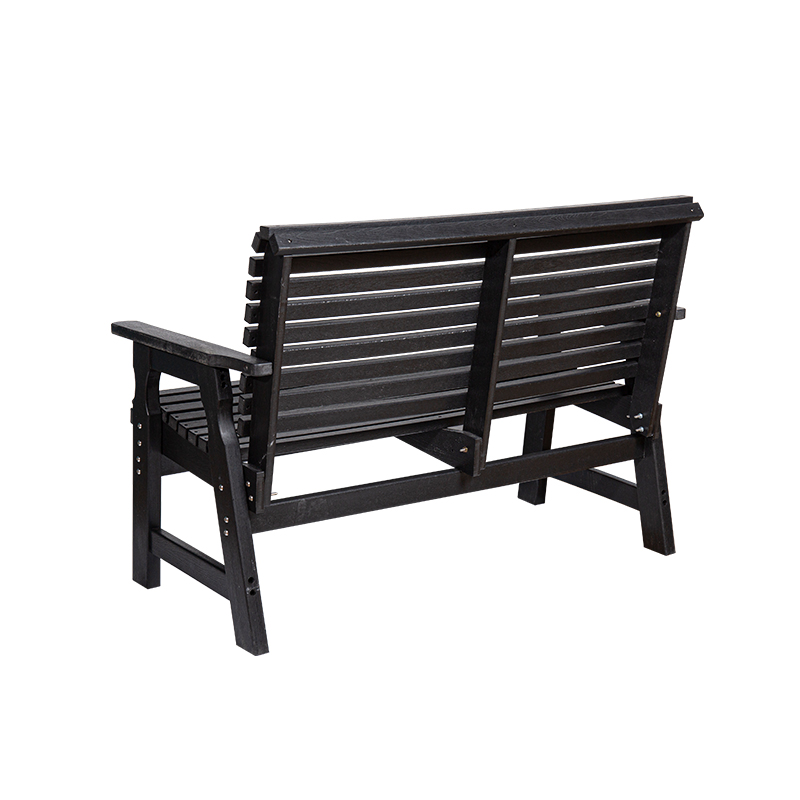 HDPE All-Weather Outdoor Glider Bench with Slatted DesignA two-person HDPE glider with slatted seat and back, quiet motion, and 304 stainless hardware for weather-ready outdoor seating.View Product →
Comfort Is Mostly Decided Before the Cushions
Cushions are the easy part; the frame geometry does the real work. Look for a seat depth that lets you sit with your feet flat on the ground and your back against the rear slats without sliding forward. Armrests should land at a height that lets a mug rest comfortably, and the back should have a slight recline rather than a straight, church-pew angle.
For upholstery, choose quick-drying foam and removable, tie-down covers — loose cushions end up on the lawn after the first windy night. A small side table within arm's reach, a rug to soften the floor, and a string of warm lights overhead complete a corner without much spending. Where space is tighter, a single
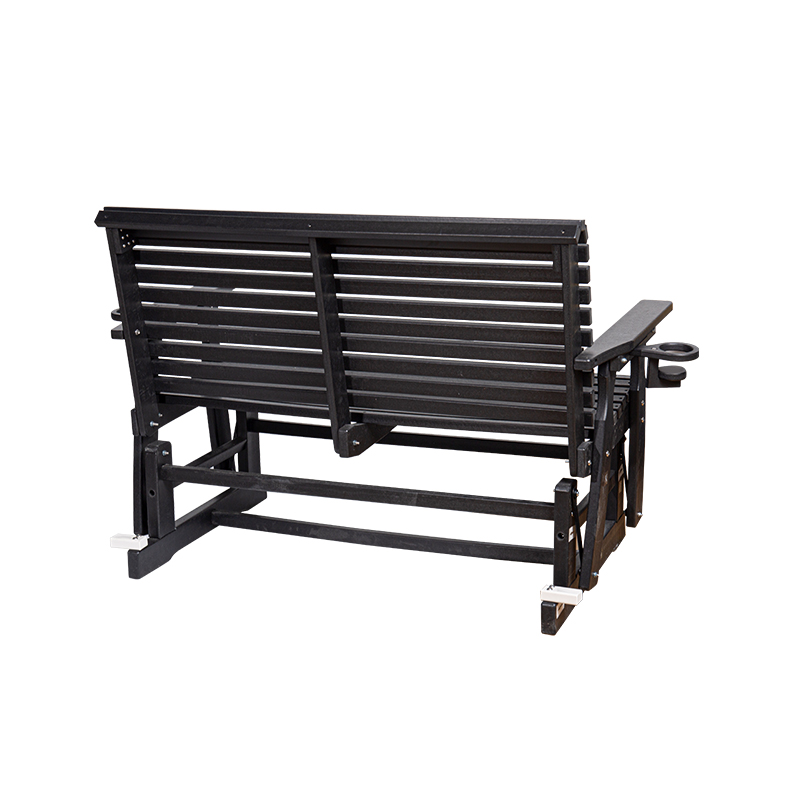 Weather-Resistant HDPE Outdoor Patio Glider ChairA single HDPE glider chair with smooth motion, UV- and moisture-resistant construction, and stainless steel hardware for compact outdoor seating.View Product →
seat gives the same gentle motion in about half the footprint.
Small Spaces, Rentals, and Modest Budgets
Renters should lean toward freestanding frames and avoid drilling into a landlord's pergola, while homeowners with a solid beam can hang a bench and reclaim the floor space underneath. Corner placement makes a patio feel larger, because the swing fills the angle that furniture usually wastes. If the budget is tight, buy the frame well and refresh the look later with inexpensive cushions and a new rug rather than replacing the whole seat.
One caution: the cheapest option in a catalog is often thin steel with a powder coat. It will look fine for a season and then start staining the patio. Weigh the hardware and check what the frame is actually made of before you commit.
Care and Safety Checks Worth Scheduling
A swing asks for very little, but it does ask. Once a month during the season, tighten bolts and inspect chains, straps, and anchor plates for wear. If a strap is fraying or a hook is bending, replace it before the next gathering rather than after. Respect the stated weight limit, and discourage standing on the seat — a moving bench is not a step stool.
Cleaning is straightforward: mild soap, water, and a soft brush will handle pollen, bird droppings, and sunscreen marks. Skip abrasive pads and bleach-heavy cleaners, which dull the surface and dry out the material. Cushions last longer when they are brought in during storms and stored dry, not folded away damp.
Putting It All Together
The best patio swing idea is rarely the most elaborate one. It is the seat placed where the shade is good, the sightline is open, and the path to the kitchen is short — the spot everyone drifts toward without being asked. Start with the position, choose a frame that suits the structure you have, and let the material do the quiet work of surviving the weather.
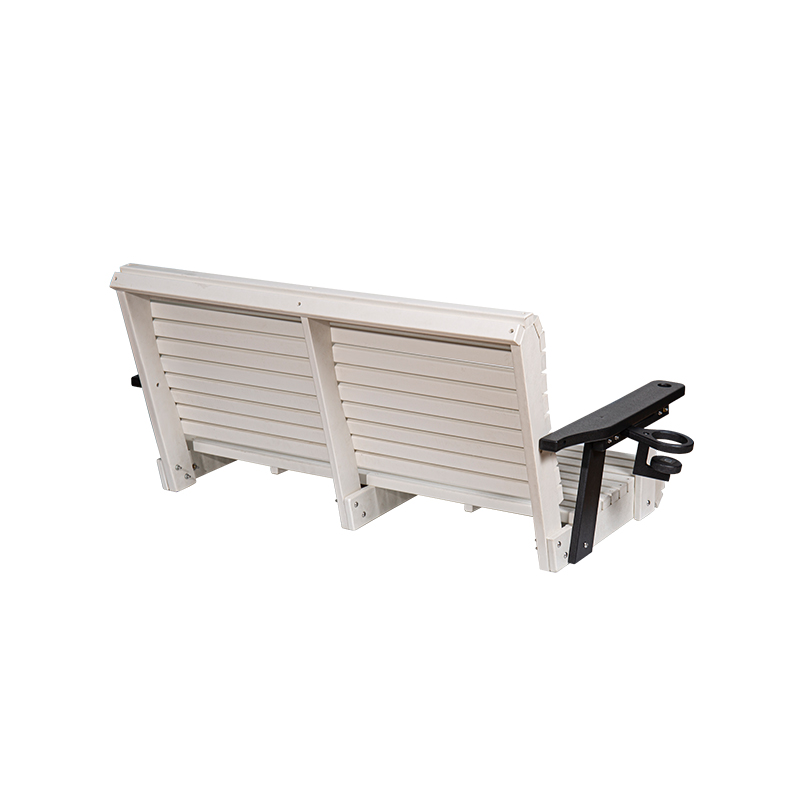 White HDPE Outdoor Swing Bench for TwoA classic white HDPE swing bench with ergonomic seat and back, weather-resistant construction, and stainless steel hardware for porch or garden relaxation.View Product →
Get those three things right, and everything after that — the cushions, the lights, the small table beside it — is simply decoration on a decision that was already sound.
Contact Us
Your email address will not be published. Required field are marked*
Categories
- Company News(1)
- Industry News(52)
Product Category

Professional Furniture Manufacturing

Zhejiang Xinyike New Material Technology Co.,Ltd is a combination of industry and trade, specializing in the production and processing of PE foam furniture and PVC foam flooring. Modern HDPE Outdoor Furniture Manufacturers in China.

- [email protected]
- +86-13511235540 /13732381238
- F/5, Factory Building 3, Xiaquan Industrial Park, Lingfeng Street, Anji Country, Huzhou City, Zhejiang Province(within Zhejiang Anji Changran Logistics Technology Co., Ltd.)
