

 English
 中文简体
 Español
what does uv resistant mean: Applications, Selection Criteria, and Practical Guidance
Nov 10, 2026Content
- 1 What Does UV Resistant Mean in Plain Terms
- 2 How Ultraviolet Light Damages Materials
- 3 How Manufacturers Build UV Resistance Into a Material
- 4 What It Means for Outdoor Furniture
- 5 Why HDPE Is a Strong Starting Point, Not a Magic Bullet
- 6 How to Judge a UV Resistance Claim
- 7 Everyday Care That Helps UV Resistance Last
- 8 Questions We Hear From Buyers
- 9 The Bottom Line
If you have ever pulled a patio chair out of storage after a long summer and noticed that the color looks tired, the surface feels chalky, or a plastic armrest has become brittle, you have seen what ultraviolet light can do. At its simplest, UV resistant means a material is made to withstand ultraviolet radiation from sunlight without breaking down as quickly as it otherwise would. But that simple phrase covers a lot of practical detail, especially when you are choosing outdoor furniture that will sit in the sun for years.
What Does UV Resistant Mean in Plain Terms
UV resistance is really a measure of how well a material keeps its useful properties after exposure to sunlight. Those properties include color, surface finish, strength, flexibility, and structural integrity. A UV-resistant material may resist fading, resist chalking, resist cracking, or simply hold its strength longer than an untreated version of the same material.
The phrase does not mean waterproof, heatproof, or fade-proof. Nor is it the same as “UV proof.” No outdoor material is immune to sunlight forever. “UV resistant” is a relative, performance-based claim: this material should hold up better than a comparable material that has no UV protection. “UV stabilized” is a narrower term, usually meaning that protective additives have been included in a polymer formulation.
How Ultraviolet Light Damages Materials
UV radiation carries enough energy to break chemical bonds. In plastics, that damage often appears as oxidation and polymer chain scission, which can start at the surface and work inward. In wood, UV light breaks down lignin near the surface, which is why untreated wood turns silver-gray and develops small checks over time. In fabrics and coatings, UV exposure can fade dyes, weaken fibers, and degrade the finish.
Weathering is a team effort: sunlight, heat, moisture, oxygen, salt air, and pollution all work together. That is why a product can look fine after one sunny season and show changes after three or four. Early signs include fading, chalking, gloss loss, fine surface cracks, and a dry or rough feel. In serious cases, the material can become brittle or lose impact strength.
How Manufacturers Build UV Resistance Into a Material
UV resistance usually comes from a combination of choices rather than a single magic ingredient. A manufacturer may start with a polymer that has good baseline weather resistance, then add a stabilizer package. UV absorbers act a little like sunscreen, absorbing harmful radiation before it damages the material. Hindered amine light stabilizers, often called HALS, interrupt the chemical damage process. Antioxidants help control heat and oxygen-related aging as well.
Pigments matter too. Some pigments protect the polymer by reflecting or absorbing UV energy, while others simply hide color change. Thickness, surface texture, and part design also affect service life. A thick, textured section can tolerate surface wear better than a thin, glossy one. Reputable manufacturers confirm these choices with accelerated weathering tests that measure color change, gloss retention, and mechanical strength after simulated sun exposure.
What It Means for Outdoor Furniture
For outdoor furniture, UV resistance is not a cosmetic extra. A chair that fades in one season may still be usable, but a chair that loses strength, develops sharp cracks, or sheds surface material is another matter. A UV-resistant patio chair should hold its structure, remain comfortable to touch, and keep a reasonable appearance through the seasons. Some color shift after years of direct sun is normal; sudden embrittlement or heavy chalking is not.
This is also why material choice matters more than a sticker. Powder-coated aluminum can resist rust, but the coating itself may fade or chalk. Outdoor fabrics can be solution-dyed for better colorfastness, yet they still age. Wood can be oiled and refinished, but oil does not reverse UV damage. A bench or glider made from properly stabilized HDPE offers a different balance: no rotting, no rusting frame to worry about, and a surface that can handle rain and sun with simple care.
 White HDPE Outdoor Swing Bench for TwoA two-adult HDPE swing bench with curved ergonomic seating and stainless steel hardware, relevant when comparing weather-resistant outdoor materials.View Product →
If you want a deeper comparison, our guide to why HDPE tends to outlast wood and metal in the sun goes into more detail.
Why HDPE Is a Strong Starting Point, Not a Magic Bullet
High-density polyethylene, or HDPE, is a sensible base material for outdoor furniture. It absorbs very little moisture, does not rot, does not rust, and handles many outdoor cleaning products well. It is also easy to mold into comfortable shapes and textured woodgrain finishes. In our own HDPE outdoor furniture work, we see the difference that formulation and color choice make. A well-stabilized HDPE can keep its appearance far longer than a cheap, unstabilized version.
Still, HDPE is not invincible. Long exposure can produce slight color shift or surface chalking, especially on darker or brighter colors. Light colors may show dirt more readily, while textured finishes tend to hide small scratches. The practical point is simple: ask what is behind the label. A credible supplier should be able to explain the polymer grade, the stabilizer system, the pigment choice, and the testing behind the claim, rather than relying on the phrase “UV resistant” alone.
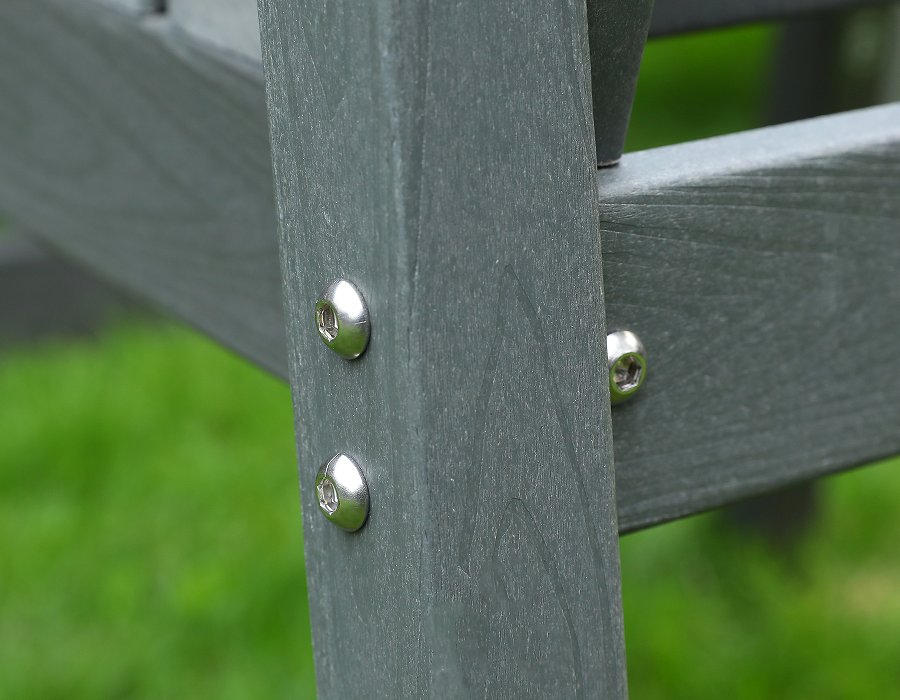 Slate Gray 2-Pack HDPE Adirondack Dining ChairsFor buyers weighing UV claims, this matched slate gray HDPE dining set offers specified arm height and wide seating for outdoor meals.View Product →
How to Judge a UV Resistance Claim
When a product description says UV resistant, look for specifics. Is the material itself stabilized, or is it only coated? Is the claim based on accelerated weathering, and does it mention color change or strength retention? A useful conversation with a supplier will cover where the product will be used, how much direct sun it will receive, and whether the color is expected to shift over time.
| Material | What UV exposure tends to do | What that means in practice |
|---|---|---|
| Stabilized HDPE | May show slight color shift or surface chalking over years | Good long-term choice when the grade and stabilizers are sound |
| Untreated wood | Lignin breaks down, surface grays, fibers check and crack | Oiling slows moisture change but does not replace UV protection |
| Powder-coated aluminum | Coating may fade, chalk, or peel | The frame resists rust, but the finish shows age |
| Outdoor fabric | Dyes fade and fibers can weaken | Solution-dyed and UV-stabilized fabrics hold color longer |
| Resin wicker | Color fades and strands can become brittle | Quality HDPE or PE weave with stabilizers makes a real difference |
Everyday Care That Helps UV Resistance Last
UV resistance is built in, but care helps it last. Rinse outdoor furniture with plain water and mild soap, then dry it with a soft cloth if you want to avoid water spots. Avoid harsh bleach solutions and abrasive pads on colored surfaces. During long periods of storage or extreme weather, a breathable cover or a shaded spot can reduce exposure. Check fasteners and joints as well; stainless hardware such as 304 stainless steel helps with rust, but it still deserves a quick inspection.
- Clean with mild soap and water instead of harsh chemicals.
- Use shade or a breathable cover for long storage periods.
- Inspect joints, screws, and moving parts once or twice a year.
- Keep pool chemicals and strong cleaners off the surface.
 Compact HDPE Round Mini Table with Stainless FastenersA compact HDPE mini table with 304 stainless steel screws, suited to small spaces and simple care alongside other outdoor furniture.View Product →
Questions We Hear From Buyers
Does UV resistant mean waterproof?
No. UV resistance is about sunlight damage. Water resistance is a separate property. An outdoor material can be excellent in rain and still need UV stabilization, or it can be UV resistant and not fully waterproof.
Will a UV-resistant chair never fade?
It may still fade, but it should fade more slowly and keep its strength better than an unprotected material. “Resistant” allows for gradual change; “proof” does not. A small amount of color shift after years in direct sun is not a sign that the product has failed.
Is HDPE better than wood in the sun?
It often requires less maintenance and will not rot, splinter, or rust. Wood can be sanded and refinished, which HDPE cannot. The better choice depends on the look you want, the exposure level, and how much upkeep you are willing to do.
The Bottom Line
UV resistant means a material has been designed or treated to slow the damage caused by ultraviolet light. It is not a permanent shield, and it is not the same as UV proof. For outdoor furniture, the real question is whether the material, stabilizers, pigments, and construction work together to keep the product usable and presentable. Look past the phrase on the label, ask how the claim is supported, and choose a material that matches the way you actually live outdoors.
Contact Us
Your email address will not be published. Required field are marked*
Categories
- Company News(1)
- Industry News(52)
Product Category

Professional Furniture Manufacturing

Zhejiang Xinyike New Material Technology Co.,Ltd is a combination of industry and trade, specializing in the production and processing of PE foam furniture and PVC foam flooring. Modern HDPE Outdoor Furniture Manufacturers in China.

- [email protected]
- +86-13511235540 /13732381238
- F/5, Factory Building 3, Xiaquan Industrial Park, Lingfeng Street, Anji Country, Huzhou City, Zhejiang Province(within Zhejiang Anji Changran Logistics Technology Co., Ltd.)
