

 English
 中文简体
中文简体 Español
Rust Free Outdoor Furniture & Durable Materials Guide
Mar 20, 2026Content
Why Patio Furniture Rust Is More Than a Cosmetic Problem
Patio furniture rust is one of the most common — and most underestimated — forms of outdoor furniture damage. What begins as a surface blemish quickly penetrates the metal beneath, weakening structural joints, staining cushions and decking, and ultimately cutting the usable life of a set from decades to just a few seasons. Iron-based metals exposed to moisture and oxygen undergo oxidation at an accelerating rate once the protective coating is breached, and a single chip or scratch in the paint or powder coat is enough to start the process.
Beyond appearance, rust compromises safety. Corroded welds on chair legs or frame joints can fail under load without visible warning. For families with children or for commercial outdoor spaces, this represents a genuine liability. Understanding which materials and finishes are truly rust-resistant — not just rust-resistant in marketing language — is the first step to making a purchase that holds up for years.
Durable Outdoor Furniture Materials That Resist Rust
Choosing the right durable outdoor furniture material is the most reliable way to eliminate rust from the equation entirely. Each material category has a distinct performance profile:
Aluminum
Aluminum is the most widely recommended rust-free metal for outdoor furniture. It does not contain iron, which means it cannot rust. It forms a thin layer of aluminum oxide when exposed to air, and this layer actually protects the surface rather than degrading it. Cast aluminum is especially durable — thick-walled, heavy, and suitable for permanent installations — while extruded aluminum is lighter and better suited to furniture that is moved frequently. Both variants are fully rust-proof under normal outdoor conditions.
Stainless Steel (Grade 304 and 316)
Stainless steel contains chromium, which forms a self-repairing passive oxide layer that blocks corrosion. Grade 304 performs well in most residential environments, while Grade 316 adds molybdenum for superior resistance in coastal or high-humidity applications. The tradeoff is weight and cost — stainless steel furniture tends to be heavier and more expensive than aluminum alternatives.
HDPE (High-Density Polyethylene) and Resin
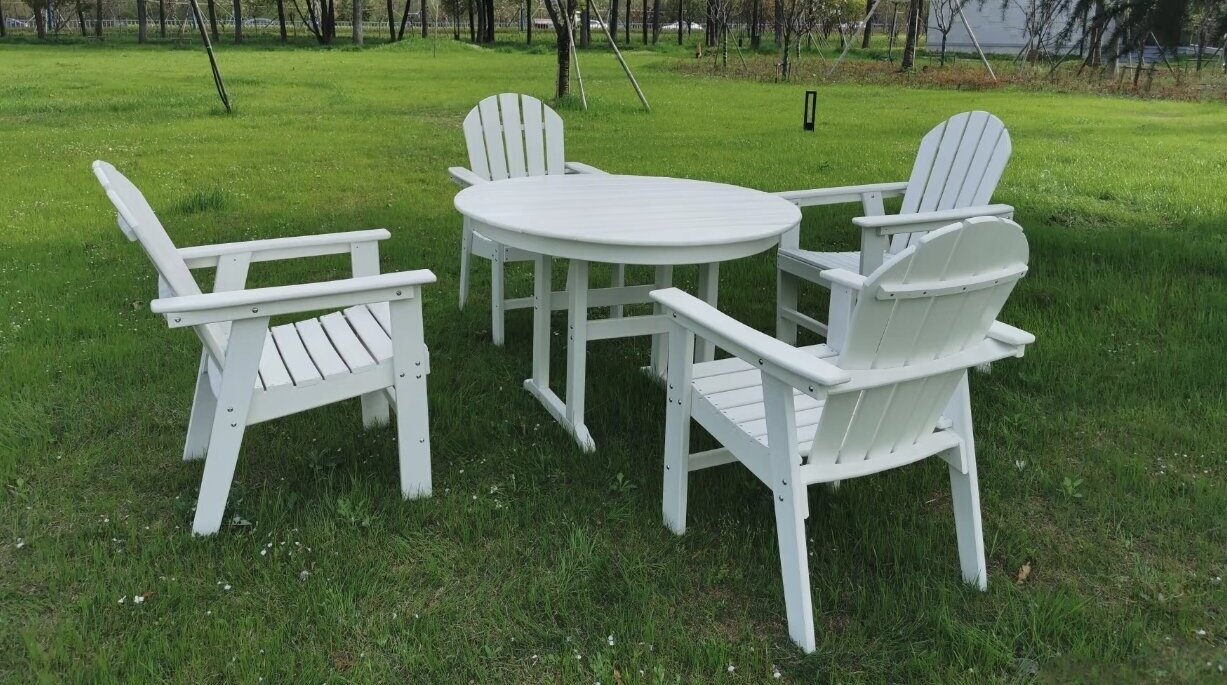
HDPE lumber — the material used in many Adirondack-style chairs and all-weather furniture — contains no metal whatsoever, making rust physically impossible. It is UV-stabilized, impervious to moisture, and does not require painting or sealing. Quality HDPE outdoor furniture typically carries warranties of 20 years or more and is available in a wide range of colors that are molded through the full thickness of the material, not just applied to the surface.
Teak and Hardwoods
Teak's naturally high oil content makes it one of the most weather-resistant woods available. It will not rust, obviously, but it also resists warping, cracking, and fungal decay. The environmental and cost considerations of teak have led many buyers toward certified FSC teak or alternative hardwoods such as shorea and eucalyptus, which offer comparable durability at lower price points.
| Material | Rust Risk | Maintenance Level | Best For |
|---|---|---|---|
| Cast Aluminum | None | Very Low | Permanent patio sets |
| Stainless Steel 316 | Negligible | Low | Coastal environments |
| HDPE / Resin | None | Very Low | Low-maintenance buyers |
| Teak | None | Low–Medium | Classic aesthetic buyers |
| Powder-Coated Steel | Moderate (if coating chips) | Medium | Budget-conscious buyers |
How to Choose a Sectional for a Small Patio
A sectional for a small patio presents a specific design challenge: maximizing seating capacity and comfort within a limited footprint without overwhelming the space or blocking traffic flow. The good news is that sectionals are inherently modular, which makes them one of the most adaptable furniture solutions for constrained outdoor areas.
Start by measuring the usable floor area and identifying the primary traffic paths — entry points, grill access, steps. A general rule of thumb is to leave at least 36 inches of clearance on traffic-facing sides of the sectional and 18 inches between the sectional and a coffee table. With those corridors mapped, the remaining space defines the maximum sectional footprint.
Configuration Tips for Small Patios
- L-shape over U-shape: An L-shaped configuration tucks into a corner and opens the center of the patio, making the space feel larger. A U-shape can work on very small patios only if scaled to 2-seat modules rather than standard 3-seat widths.
- Armless middle modules: Sections without arms have a narrower profile and allow the layout to be reconfigured more freely as needs change.
- Built-in storage ottomans: Replacing a standalone coffee table with a storage ottoman that doubles as a surface reclaims square footage while adding functional storage for cushions and accessories.
- Slim-arm designs: Wide track arms add visual and physical bulk. Look for sectionals with arms under 4 inches wide to preserve seating area without sacrificing the finished look.
- Light-colored cushions and frames: Lighter tones visually recede and make a compact patio feel more open than dark frames and deep jewel-toned upholstery.
For material, aluminum-framed sectionals offer the best combination of lightweight maneuverability — useful when rearranging a small patio — and full rust resistance. All-weather wicker wrapped over an aluminum frame is a particularly popular choice because it provides the warmth of a woven aesthetic with the structural benefits of metal underneath.
What "Rust Free Outdoor Furniture" Actually Means in Practice
Not all products marketed as rust free outdoor furniture are equally resistant. The term is applied loosely across price points, and distinguishing genuine rust-proof construction from surface-level treatment requires reading specifications carefully.
True rust-free furniture falls into two categories: furniture made from inherently non-rusting materials (aluminum, HDPE, teak, resin wicker), and furniture made from steel with protective systems specifically engineered to prevent corrosion. For the latter, look for:
- Galvanized or zinc-coated steel: The zinc sacrificial layer corrodes in place of the steel beneath, providing meaningful rust protection even when the topcoat is scratched.
- Electrostatically applied powder coat: Electrostatic application produces a more uniform film thickness than spray painting, eliminating thin spots at corners and welds where rust typically initiates first.
- Sealed hollow tube ends: Open tube ends trap standing water inside the frame. Quality manufacturers weld or cap these openings to prevent internal rusting that is invisible until structural failure occurs.
Warranty length is a reliable proxy for material confidence. Manufacturers offering 3-year or longer rust warranties have tested their products under accelerated weathering conditions and stand behind the claim. A one-year warranty on a product marketed as "rust resistant" is a meaningful red flag.
Maintenance Practices That Extend the Life of Outdoor Furniture
Even the most durable materials benefit from basic maintenance routines. For metal furniture with powder-coat finishes, a twice-annual rinse with mild soap and water removes surface contaminants — particularly salt deposits in coastal areas — that accelerate coating breakdown. Any chips or scratches in the finish should be touched up immediately with matching touch-up paint to prevent moisture from reaching the base metal.
For teak and hardwood furniture, applying a penetrating teak oil or sealer once per year preserves the natural oils that keep the wood dimensionally stable. Left untreated, teak weathers to an attractive silver-gray patina that many owners prefer — either approach is valid and does not significantly affect structural durability.
Regardless of material, using furniture covers during off-season storage is the single highest-return maintenance action available. Breathable, waterproof covers that allow moisture to escape while blocking rain and UV exposure can double or triple the functional lifespan of any outdoor furniture set by preventing the cumulative environmental exposure that degrades finishes, fades fabrics, and stresses structural connections over time.
Contact Us
Your email address will not be published. Required field are marked*
Categories
- Company News(1)
- Industry News(47)
Product Category

Professional Furniture Manufacturing

Zhejiang Xinyike New Material Technology Co.,Ltd is a combination of industry and trade, specializing in the production and processing of PE foam furniture and PVC foam flooring. Modern HDPE Outdoor Furniture Manufacturers in China.

- [email protected]
- +86-13511235540 /13732381238
- F/5, Factory Building 3, Xiaquan Industrial Park, Lingfeng Street, Anji Country, Huzhou City, Zhejiang Province(within Zhejiang Anji Changran Logistics Technology Co., Ltd.)
