

 English
 中文简体
中文简体 Español
Rust Proof Outdoor Furniture: Best Materials & Maintenance
Mar 12, 2026Content
- 1 Most Durable Outdoor Furniture Materials: How They Compare
- 2 Cast Aluminum Patio Chairs: Why They Lead the Category
- 3 Wire Mesh Patio Chairs: Durability and Rust Considerations
- 4 Rustproofing Outdoor Furniture: Methods and Products That Work
- 5 Buying Patio Chairs: What to Look For at Retail
- 6 Climate-Specific Recommendations for Outdoor Furniture Selection
The most durable, rust-proof outdoor furniture material is cast aluminum — it contains no iron, cannot rust by definition, and withstands decades of outdoor exposure without structural degradation. Wrought aluminum, HDPE resin, and teak wood are close alternatives. Steel and iron furniture can be made significantly more resistant to rust through powder coating, galvanizing, and regular maintenance, but they are never fully rust-proof and require more ongoing attention. If you want outdoor furniture that genuinely requires zero rust maintenance, cast aluminum patio chairs are the definitive answer — particularly in coastal, humid, or high-rainfall environments where untreated steel furniture can begin showing rust within a single season.
Most Durable Outdoor Furniture Materials: How They Compare
Outdoor furniture durability encompasses rust resistance, UV stability, structural strength, weight, and maintenance requirements. No single material wins on every criterion — the right choice depends on your climate, aesthetic preference, and how much annual maintenance you are willing to perform.
| Material | Rust Risk | UV Resistance | Typical Lifespan | Maintenance Level | Relative Weight |
|---|---|---|---|---|---|
| Cast aluminum | None | Excellent | 20–30+ years | Very Low | Medium |
| Wrought aluminum | None | Excellent | 15–25 years | Low | Light |
| HDPE resin / poly lumber | None | Very Good | 20–50 years | Very Low | Heavy |
| Teak wood | None | Good (grays over time) | 20–50 years | Low–Medium | Heavy |
| Powder-coated steel | Low–Medium | Good | 5–15 years | Medium | Heavy |
| Wrought iron | High (if coating fails) | Good | 10–20 years w/ maintenance | High | Very Heavy |
| Wicker / resin wicker | None (frame may rust) | Moderate | 5–15 years | Low–Medium | Light |
For purely rust-proof furniture that also handles well, looks refined, and requires minimal maintenance, cast aluminum and wrought aluminum dominate the market for good reason. HDPE poly lumber is the top pick for those prioritizing absolute longevity with zero maintenance, though its heavier weight and somewhat utilitarian appearance suit Adirondack and Adirondack-adjacent styles better than formal dining sets.
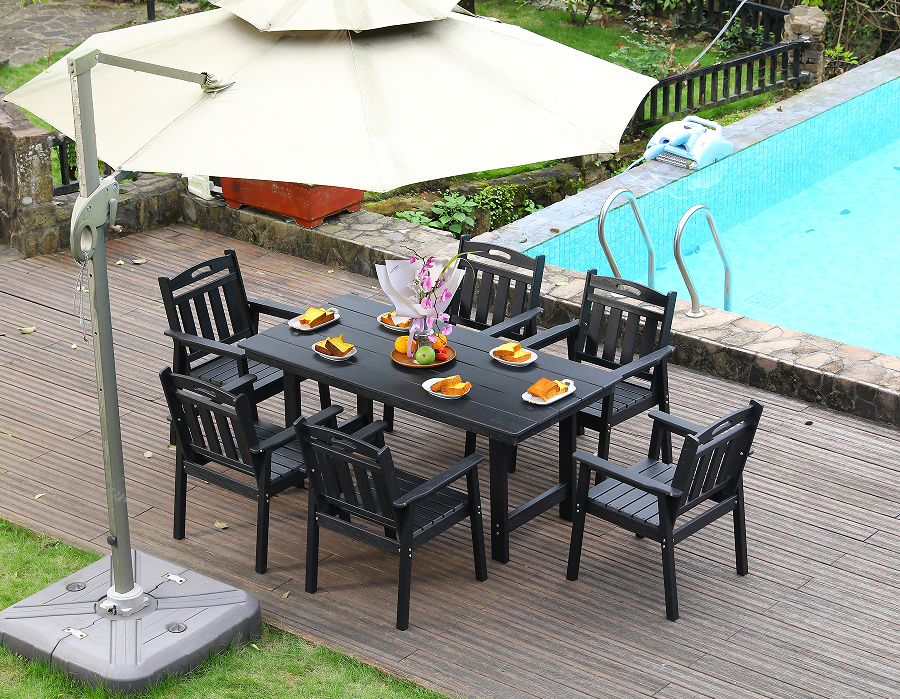
Cast Aluminum Patio Chairs: Why They Lead the Category
Cast aluminum furniture is made by pouring molten aluminum alloy into a mold, allowing intricate shapes — decorative scrollwork, curved seat backs, detailed armrests — that are not possible with tubular or extruded aluminum. The casting process produces a thick, solid wall section that is structurally rigid without additional reinforcement, which is why cast aluminum chairs feel substantially more substantial than lightweight extruded aluminum pieces.
Why Cast Aluminum Cannot Rust
Rust is iron oxide — it requires iron in the base metal to form. Aluminum contains no iron, so it is chemically incapable of rusting. When aluminum oxidizes, it forms aluminum oxide (Al₂O₃) — a hard, transparent, tightly adherent layer that actually protects the underlying metal from further oxidation rather than flaking away as rust does. This passive oxide layer reforms within seconds if scratched or damaged, providing self-healing corrosion protection that iron-based metals cannot replicate.
Quality cast aluminum patio chairs are additionally finished with a powder coat paint layer baked on at 350–400°F (175–205°C), which bonds to the aluminum surface and provides UV resistance, color retention, and a smooth appearance. The powder coat is cosmetic and protective, but even if it chips or scratches, the bare aluminum underneath will not rust — unlike steel furniture where any coating breach immediately exposes the metal to rust initiation.
Weight and Stability Characteristics
A typical cast aluminum dining chair weighs 15–25 lbs (7–11 kg) — heavy enough to stay put on a deck or patio in moderate wind without being anchored, but light enough to be moved easily by one person. This weight range is a practical sweet spot that wrought iron furniture (which can exceed 40–60 lbs per chair) does not achieve, and that very lightweight tubular aluminum furniture falls below — pieces under 10 lbs routinely blow over in wind and tip during normal use.
Cast Aluminum Swivel Patio Chairs
Cast aluminum swivel patio chairs add a 360° swivel base — typically a steel or aluminum ball-bearing swivel mechanism — to the cast aluminum frame. This configuration is particularly popular for outdoor dining sets and conversation groupings where occupants want to turn toward different parts of a table or gathering without moving the chair. The swivel mechanism is the most maintenance-sensitive component of these chairs — even on a rust-proof aluminum frame, the swivel bearing can corrode if it uses non-stainless steel components. When purchasing cast aluminum swivel chairs, confirm that the swivel mechanism uses stainless steel or aluminum hardware, not plated carbon steel, to ensure the swivel performs smoothly after years of outdoor exposure. Annual application of a marine-grade grease or silicone spray to the swivel bearing extends service life significantly.
Wire Mesh Patio Chairs: Durability and Rust Considerations
Wire mesh patio chairs use a steel or aluminum mesh seat and back panel — either welded wire grid or expanded metal sheet — supported by a tubular steel or aluminum frame. They are a popular mid-range option that balances visual lightness (the open mesh reduces visual bulk and allows rain to drain freely) with reasonable structural strength.
Steel Wire Mesh: The Rust Vulnerability
The majority of budget-to-mid-range wire mesh patio chairs use steel mesh and steel frames finished with powder coat. The open mesh structure creates a rust risk that solid-panel steel furniture does not have to the same degree: every intersection point in the mesh weave is a location where the powder coat is thin or potentially incomplete, and where water pools and remains after rain. In humid or coastal environments, wire mesh steel chairs can show rust at weld points and mesh intersections within one to three seasons even with quality powder coating.
Galvanized steel mesh chairs perform significantly better — the zinc galvanizing coating provides sacrificial protection that continues to resist rust even if the topcoat is breached. Hot-dip galvanized steel with a powder coat topcoat represents the most durable finish specification for steel wire mesh outdoor furniture.
Aluminum Wire Mesh: The Rust-Proof Alternative
Premium wire mesh chairs use aluminum mesh panels on aluminum frames — these are completely rust-proof by the same chemistry that makes cast aluminum furniture rust-proof. Aluminum mesh chairs are lighter than steel equivalents and more expensive, but the long-term maintenance advantage is significant. If you are comparing wire mesh chairs and rust resistance is a priority, verifying that both the mesh and frame are aluminum (not just the frame) is the critical specification check.
Comfort and Practical Considerations
Wire mesh seats stay cooler in direct sun than solid metal seats because air circulates through the mesh and heat is not retained in a solid surface. This is a practical comfort advantage for hot-climate patios. The mesh surface also allows rain and sprinkler water to drain immediately rather than pooling, which benefits both comfort and longevity. However, wire mesh can leave temporary grid imprints on skin during extended sitting — a minor comfort consideration that adding a removable seat cushion resolves.
Rustproofing Outdoor Furniture: Methods and Products That Work
For steel and iron patio furniture — which is widely owned and covers a broad price range — active rust prevention is necessary to achieve acceptable service life. The following methods address both new furniture protection and the treatment of existing furniture showing early rust.
Powder Coating: The Factory Standard for Rust Prevention
Virtually all quality outdoor steel furniture leaves the factory with a powder coat finish. Powder coating is electrostatically applied dry powder paint that is then cured at high temperature to form a continuous, thick film — typically 2–4 mil (50–100 micrometers) thick, compared to 1–2 mil for liquid spray paint. This thickness and the continuous (no solvent evaporation holes) film structure gives powder coat substantially better chip resistance, UV stability, and moisture barrier performance than conventional paint.
Powder coat does not last forever outdoors. UV radiation gradually chalks the surface over 5–10 years depending on color and sun exposure, and physical impacts chip the coating. Once powder coat is chipped and bare steel is exposed, rust initiates within days in humid conditions. Touching up chips with a compatible spray paint (not spray lacquer) immediately after they occur is the most important maintenance habit for steel outdoor furniture.
Treating Existing Surface Rust Before It Spreads
- Remove loose rust mechanically: Use a wire brush, sandpaper (80–120 grit), or a drill-mounted wire wheel to remove all loose and flaking rust down to sound metal or tightly adherent rust. Do not paint over loose rust — it will continue spreading underneath.
- Apply a rust converter product: Products such as Rust-Oleum Rust Reformer or Corroseal chemically convert iron oxide to a stable, paintable surface (iron tannate or iron phosphate). Apply to remaining tightly bonded rust after wire brushing. Allow to cure fully per product instructions — typically 24 hours.
- Apply a rust-inhibiting primer: A zinc-phosphate or zinc-chromate primer provides a chemical rust barrier between the metal and the topcoat. Two thin coats are better than one thick coat for adhesion and coverage uniformity.
- Apply a UV-stable exterior topcoat: Rust-Oleum Universal, Krylon Fusion, or similar direct-to-metal spray paints provide both color and a UV-resistant barrier. Match the original color as closely as possible for appearance. Two coats with 30-minute flash time between applications.
- Apply a clear coat sealant: A final coat of exterior clear coat significantly extends the life of the color coat and provides additional moisture resistance. This step is optional but meaningfully extends recoating intervals.
Wax and Sealant Application for Annual Maintenance
For powder-coated or painted outdoor furniture in good condition, applying a coat of automotive paste wax or a dedicated outdoor furniture sealant once per year significantly extends the life of the finish by providing a sacrificial water-repellent layer above the paint. Carnauba-based paste waxes (such as Turtle Wax or Meguiar's) bond to powder-coated surfaces effectively and reduce UV chalk development, making surfaces easier to clean and less prone to moisture penetration through micro-porosity in aged coatings.
Storage and Covering: The Simplest Rust Prevention
No treatment or coating eliminates the corrosion benefit of simply keeping steel and iron furniture dry. Furniture stored in a shed or garage during winter, or covered with UV-resistant, ventilated furniture covers during the off-season, can extend coating life two to three times compared to year-round uncovered outdoor exposure. Breathable covers — those with ventilation grommets or non-woven fabric construction — are preferable to solid plastic tarps, which trap condensation underneath and accelerate rust at contact points.
Buying Patio Chairs: What to Look For at Retail
Whether shopping at Ace Hardware, a home improvement store, or an outdoor furniture specialty retailer, the same evaluation criteria apply. Most retail floor samples and display pieces are representative of construction quality, so hands-on inspection before purchase is worthwhile.
- Check the frame material tag or product specification: Labels should explicitly state "cast aluminum," "aluminum," "steel," or "iron." If the label only says "metal" without specifying, ask or check the product page — "metal" is sometimes used to obscure that the frame is steel rather than the more desirable aluminum.
- Inspect weld quality and powder coat coverage: Look at weld points and corners — these are where rust initiates first on steel furniture. Quality welds are smooth and fully covered with powder coat. Rough welds with visible porosity or thin/bare coating at the weld are warning signs of lower manufacturing quality.
- Test stability and flex: Sit in the chair and apply side-to-side force to the frame. Quality outdoor chairs should feel rigid with no racking flex. Flex indicates thin wall sections or inadequate bracing that will worsen over years of outdoor temperature cycling.
- Check hardware material: Examine visible fasteners, swivel fittings, and connecting hardware. Stainless steel or aluminum hardware resists rust; plated steel hardware (identifiable by its slightly bluish-silver appearance) will rust even on an aluminum frame once the plating degrades.
- Verify weight capacity rating: Commercial-grade outdoor chairs are typically rated for 250–350 lbs (113–159 kg). Consumer-grade chairs often carry 250 lb ratings; heavy-duty versions go to 400 lbs. Confirm the rating meets your needs before purchase — overloading chairs stresses welds and joints and accelerates structural failure.
- Ask about warranty terms: Cast aluminum furniture from quality brands typically carries 5–10 year structural warranties, sometimes lifetime. Powder coat finish warranties of 1–3 years are common. Steel furniture warranties are typically shorter — 1–3 years structural, 1 year finish. Warranty length is a reasonable proxy for manufacturer confidence in their product quality.
Price as a Quality Indicator
Outdoor furniture pricing correlates reasonably well with durability for aluminum products. Cast aluminum dining chairs from established brands typically retail for $150–$400 per chair; budget cast aluminum pieces run $60–$120 and typically use thinner wall sections and lower-quality powder coat. Wire mesh patio chairs in steel range from $40–$150 each; quality aluminum mesh chairs start around $120–$200. The total cost of ownership calculation — purchase price divided by years of useful service — almost always favors the more expensive, higher-quality piece for outdoor furniture used year-round in variable weather.
Climate-Specific Recommendations for Outdoor Furniture Selection
The right material choice varies by climate. What performs excellently in a dry inland climate may fail rapidly on a coastal or tropical patio. Matching material selection to your specific environment prevents premature failure and unnecessary maintenance burden.
- Coastal and saltwater environments: Salt spray is the most aggressive corrosion environment for outdoor furniture. Cast aluminum or wrought aluminum is the only metal furniture that performs reliably without annual maintenance in direct coastal exposure. Marine-grade 316 stainless steel also performs well but is expensive. All steel and iron furniture — regardless of coating quality — will require significant maintenance attention within 1–3 years in coastal conditions. HDPE poly lumber is also excellent for coastal use.
- Hot, high-UV climates (desert, southern US): UV degradation of powder coat and resin materials is the primary concern. Cast aluminum with high-quality powder coat, teak, and HDPE poly lumber all handle UV well. Resin wicker and most plastic furniture fades and becomes brittle within 3–5 years without UV stabilization additives. Verify that any resin or wicker furniture specifies UV inhibitors in its construction.
- Humid subtropical and tropical climates: Combine the corrosion concerns of high humidity with UV and heat. Aluminum is again the safest metal choice. Teak performs well but benefits from annual oiling to maintain color in very humid conditions. Cushion and sling materials must be specifically rated for high-humidity outdoor use — standard indoor foam absorbs moisture, develops mold, and breaks down rapidly.
- Cold climates with freeze-thaw cycles: Freeze-thaw cycling accelerates coating failure by expanding moisture that has penetrated micro-cracks in paint or powder coat. Cast aluminum handles freeze-thaw well mechanically — aluminum does not become brittle in cold. Wrought iron should be stored indoors or covered during winter to prevent coating failure. HDPE poly lumber is completely immune to freeze-thaw damage.
Contact Us
Your email address will not be published. Required field are marked*
Categories
- Company News(1)
- Industry News(47)
Product Category

Professional Furniture Manufacturing

Zhejiang Xinyike New Material Technology Co.,Ltd is a combination of industry and trade, specializing in the production and processing of PE foam furniture and PVC foam flooring. Modern HDPE Outdoor Furniture Manufacturers in China.

- [email protected]
- +86-13511235540 /13732381238
- F/5, Factory Building 3, Xiaquan Industrial Park, Lingfeng Street, Anji Country, Huzhou City, Zhejiang Province(within Zhejiang Anji Changran Logistics Technology Co., Ltd.)
