Industry Knowledge
Optimizing wall thickness and rib geometry for load-bearing longevity
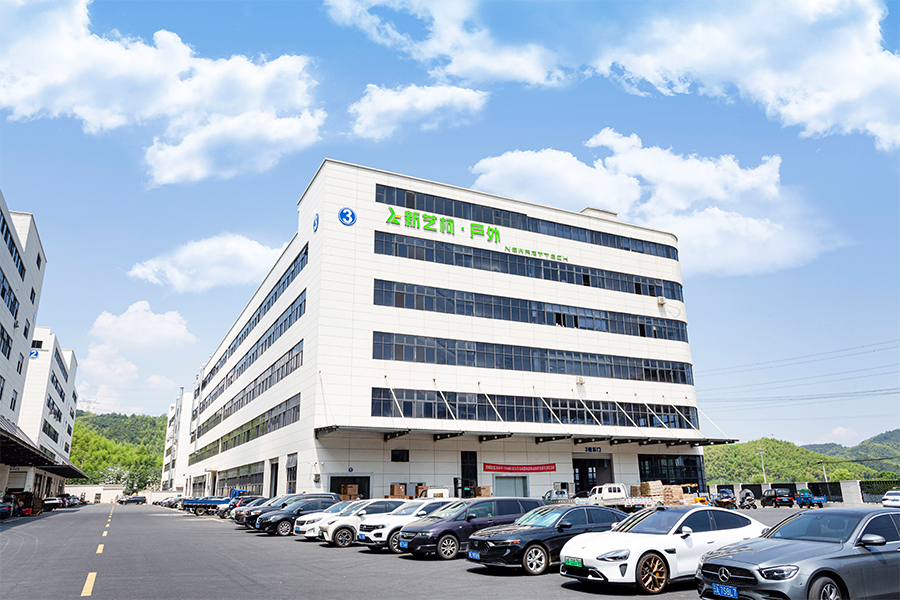
Adirondack Chair Companion components benefit from targeted wall-thickness strategies rather than uniform mass. Increasing section thickness at concentrated load paths—armrests, seat-to-back junctions, and leg pockets—reduces local stress without adding unnecessary weight elsewhere. Integrating structural ribs and fillets at these nodes controls stress flow and prevents crack initiation. In practice, Zhejiang Xinyike New Material Technology Co.,Ltd. applies controlled-thickness maps during mold design for Adirondack Companion Seat parts to ensure both stiffness and material economy in large-scale runs.
Rib placement and fillet design details
Place ribs to align with principal load vectors—along the underside of seats and the inner face of armrests—and use gradual fillets to avoid sharp transitions that concentrate stress. For HDPE-based Adirondack Chair Companion components, ribs with a height-to-thickness ratio optimized for the resin grade prevent sink marks while delivering stiffness. Proper draft angles and gate locations during tooling further protect rib tips from delamination during demolding.
Joint engineering: mechanical interlocks, bosses, and fastener strategy
Durability hinges on robust joint solutions. Use wide, reinforced bosses and metal-insert-ready cavities where repeat assembly or heavy loads occur. For Adirondack Chair Companion Sets that require on-site assembly, design captive fastener systems and oversized bearing surfaces to distribute clamping loads. Zhejiang Xinyike’s production approach integrates boss reinforcement patterns and specifies stainless fasteners for outdoor corrosion resistance, reducing field failures and maintenance cycles.
Choosing fasteners and insert methods
Heat-set or ultrasonic inserts perform well in HDPE for permanent joints, while threaded inserts combined with oversized support pads work for serviceable connections. Where repeated disassembly is expected—e.g., during transportation—design redundant load paths so a single stripped boss does not compromise the entire Adirondack Companion Seat assembly.
Mold and tooling practices that preserve structural integrity
Tooling choices directly impact part performance. Balanced gating, uniform cooling circuits, and controlled pack/hold schedules minimize residual stresses and warpage that reduce service life under cyclic loading. Zhejiang Xinyike’s technical team applies process windows tailored to HDPE’s crystallization behavior for Adirondack Chair Companion components, ensuring dimensional stability across production lots.
Pilot runs and dimensional verification
Small-scale pilot production and CMM verification detect shrinkage or stress-induced distortion early. Validate hinge clearances and mating surfaces under simulated loads to confirm that design tolerances remain functional after cooling and post-processing steps.
Weathering, drainage, and surface design to prevent accelerated degradation
Structural durability is enhanced when water and contaminants cannot accumulate. Incorporate discreet drainage channels and slopes in seating planes and integrate shallow weep paths behind back slats. Surface texturing and matte finishes reduce visible abrasion while UV-stabilized HDPE formulations protect polymer chains; Zhejiang Xinyike enforces strict incoming material checks and masterbatch traceability to ensure consistent UV performance across Adirondack Chair Companion Sets exported to diverse climates.
Surface finish choices with structural benefits
Textured surfaces hide minor wear and reduce slip; micro-patterns also disrupt water film formation, helping drainage features perform better. When textured finishes are combined with ribbed undersides, the overall stiffness-to-weight ratio improves without compromising aesthetic requirements.
Modularity and reparability to extend service life
Designing Adirondack Companion Seat modules with interchangeable components simplifies repairs and reduces waste. Standardize common interface dimensions so replacement arms, legs, or back panels can be fitted without custom tooling. Zhejiang Xinyike’s production ethos—combining industry and trade capabilities—supports bespoke small-batch spares as well as wholesale replacement programs for long-term customers.
- Reinforce load points with local thickening and ribs instead of full-part overthickness.
- Design bosses for metal inserts where repeated torque is anticipated.
- Provide drainage channels and gentle surface slopes to avoid water pooling.
- Standardize modular interfaces to simplify field repairs and spare-part logistics.
Testing regimes and quality controls that correlate with real-world durability
Beyond visual inspection, correlate accelerated aging, cyclic loading, and environmental stress-crack resistance tests to predict outdoor performance. For Adirondack Chair Companion Sets, conduct joint fatigue tests and UV-exposure panels followed by impact testing to confirm residual toughness. Zhejiang Xinyike’s comprehensive quality management system ensures such tests inform material selection and process adjustments before large-scale export shipments to markets like the USA, Germany, and Australia.
| Structural Element |
Design Detail |
Durability Benefit |
| Reinforced bosses |
Oversized flange & metal-insert readiness |
Prevents strip-out and extends serviceable life |
| Ribbed sections |
Aligned with load vectors |
Improves stiffness without heavy weight gain |
| Drainage features |
Hidden channels & slopes |
Reduces moisture-related degradation |
Implementation notes for manufacturing partners
When scaling designs to production, ensure tooling vendors follow the specified cooling maps and that incoming HDPE lots meet the targeted melt flow and ESCR metrics. Zhejiang Xinyike integrates raw material control and production oversight to maintain predictable output for Custom Adirondack Chair Companion Sets and supports export-ready documentation for customers across 30+ countries. Maintain a close feedback loop between field returns and engineering so future iterations continually improve structural robustness.


 English
 中文简体
中文简体 Español