

 English
 中文简体
中文简体 Español
Can Adirondack Chairs Stay Outside in Winter? A Material-by-Material Guide
Aug 28, 2026Content
Every February, decks across the northern United States, Canada, and northern Europe show the same scene: a row of Adirondack chairs buried under snow, waiting for spring. Whether those chairs come out of the season looking new or cracked, gray, and rust-streaked depends far less on how cold the winter gets than on what the chairs are made of and what happened to them back in October.
The short answer first: HDPE (poly lumber) Adirondack chairs can stay outside all winter with nothing more than a fall cleaning and a hardware check. Wood chairs can survive outdoors too, but they need sealing, elevation, and ideally a breathable cover. Painted steel frames and any chair with fabric cushions should be covered or brought indoors. Here is how each material actually behaves in freezing weather, and what to do before the first hard frost.
What Winter Actually Does to a Chair
Cold alone is harmless. Dry sub-zero air will not hurt a well-built chair, which is why indoor storage works so well. The damage comes from moisture interacting with freeze-thaw cycles, and six mechanisms do nearly all of it:
- Water absorption. Porous materials and end-grain joints soak up meltwater and stay wet for months under a snowpack.
- Freeze-thaw expansion. Water expands about 9% as it freezes; inside a wood fiber or a hairline crack, that pressure splits fibers and pries joints open a little more with every cycle.
- Standing dampness. Weeks of contact with wet snow breed mold, mildew, and eventually rot on anything organic.
- Snow and ice load. Wet snow is heavy, and slabs sliding off a roof can crack a frame they land on.
- De-icing salt. Splash from treated driveways and walkways corrodes bare steel and plated fasteners and leaves white streaks that resist washing.
- Winter UV. Sunlight reflected off snow still fades inexpensive plastics, even in January.
Which Materials Can Genuinely Stay Outside All Winter
HDPE and poly lumber
This is the one material you can leave out without a second thought. HDPE absorbs essentially no water, so freeze-thaw cycles have nothing to act on, and it will not rot, rust, splinter, or need resealing. Quality HDPE lumber is UV-stabilized through its full thickness, so a scratch never exposes a different color underneath, and snow can sit on it from December through March without consequence. Maintenance is a soap-and-water wash in spring and re-tightening hardware. It is no accident that poly lumber dominates in snow-country markets such as the US Northeast, Canada, and Scandinavia.
Black all-weather HDPE Adirondack chair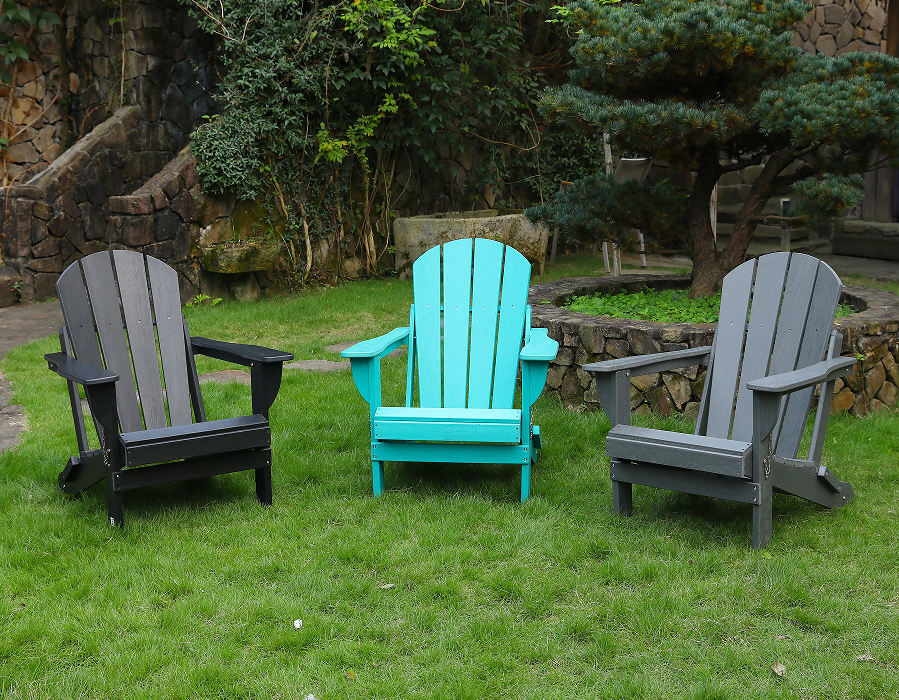 Black All-Weather HDPE Adirondack Frog ChairAn HDPE Adirondack chair that shrugs off snow, ice, and UV exposure without rotting or resealing. A fitting pick here, since the surrounding text names poly lumber as the one material you can leave outside all winter.View Product →
Wood
Dense hardwoods such as teak tolerate winter best, trading their golden tone for a silver patina that is purely cosmetic. Softwoods, including cedar, pine, and most budget builds, are the chairs that split and rot, because every melt cycle soaks them again. A wooden chair can stay out if it is resealed every year or two, kept off damp ground, and covered with breathable fabric. The honest rule among dealers, though, is simpler: a dry shed roughly doubles the life of a softwood chair.
Metal
Aluminum does not rust, so aluminum-frame chairs handle winter well; only cheap fasteners will streak. Steel and wrought iron are the opposite. Any chip in the coating becomes a rust point over a wet winter, so powder-coated steel can stay out in milder regions under a cover, but in real snow country it belongs in storage.
| Material | Stay out all winter? | Main winter risk | Minimum care |
|---|---|---|---|
| HDPE / poly lumber | Yes | Slight fading in intense reflected sun | Fall wash, spring fastener check |
| Teak and dense hardwood | Mostly yes | Graying, small surface checks | Optional sealing, keep off damp ground |
| Cedar, pine, softwood | Not recommended | Rot, splits, warping | Seal yearly; store dry if possible |
| Aluminum | Yes | Corrosion of low-grade fasteners | Rinse off salt, check hardware |
| Steel and wrought iron | No | Rust at scratches and joints | Cover in mild climates, store in snow country |
Getting a Chair Winter-Ready When It Stays Outside
Chairs that ride out the season on the deck need about thirty minutes of attention before the first hard freeze. Do these in order:
- Wash off dirt, pollen, and bird droppings with mild soap and water, then let everything dry completely. Trapped moisture is what feeds mildew under a cover.
- Tighten every bolt and screw. A summer of use plus the first freeze-thaw cycles loosens joints, and a loose fastener in October becomes a wobbly chair in April.
- Move chairs off soil, grass, or damp decking onto a surface that drains, or lift the legs onto pavers so they are not standing in meltwater.
- Position chairs away from rooflines, where sliding snow and falling ice land hard, and away from driveways that get salted.
- If you cover, use breathable fabric covers cinched at the base rather than sealed plastic tarps, which trap condensation against the frame.
- Bring cushions indoors. Foam and fabric hold water no matter what the label promises, and a wet cushion mildews the chair under it.
When Storage Beats Covering
For anything other than HDPE, a dry garage or shed removes every winter risk at once and costs nothing but the effort of moving the chairs. Three details decide whether storage helps or quietly hurts:
- Dry before storing. A chair put away damp grows mildew inside a closed shed by January.
- Keep it off concrete. Slabs stay cold and damp, and that moisture creeps into wood legs over months.
- Make the move easy. Folding and stackable designs help, but chairs with built-in carry handles are the ones people actually haul in and out every season instead of leaving outside.
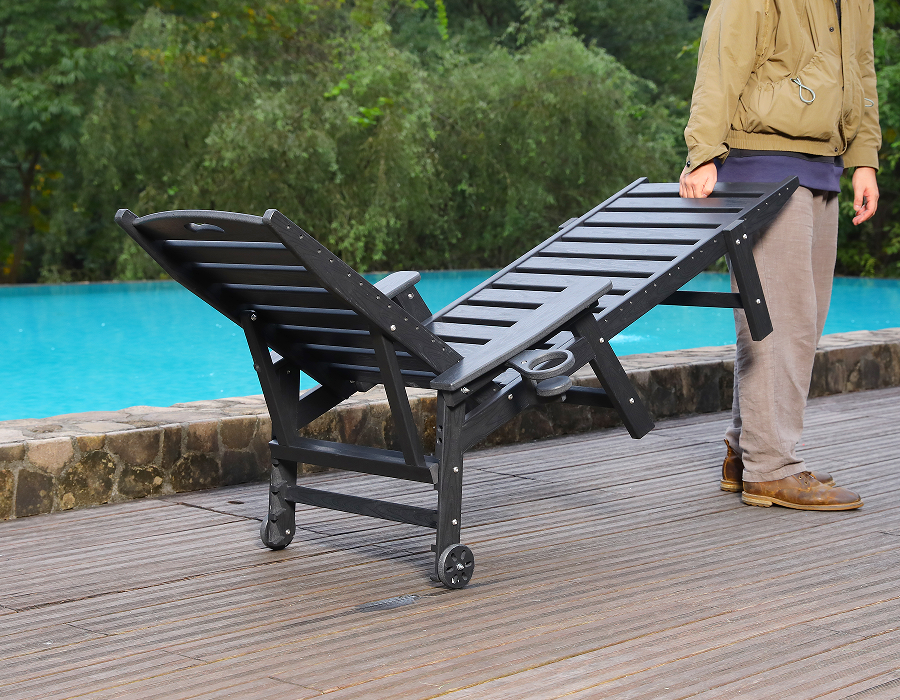 Midnight Black HDPE Handle-Ready Adirondack Lounge ChairA weatherproof HDPE Adirondack chair with an integrated grip and cup holder, making it easy to reposition or tip seats to drain meltwater—exactly the deck-storage tactic the adjacent paragraph recommends.View Product →
On open decks with no storage, group the chairs together and angle or tip the seats so meltwater drains instead of pooling. That single adjustment prevents a surprising share of spring damage.
The Weak Point Nobody Checks: Fasteners
Frames rarely fail first; fasteners do. Most rust streaks on so-called maintenance-free chairs trace back to zinc-plated or plain steel screws rather than the lumber, and winter is exactly when they corrode fastest, sitting in a pocket of meltwater for months.
Two things matter most, whether you are buying new or checking chairs you already own. First is hardware made of 304 stainless steel, which shrugs off road-salt splash and coastal air. Second is a midwinter re-torque: poly lumber expands and contracts slightly with temperature, so bolts can loosen after the first hard freezes. Sixty seconds with a screwdriver in December and again in April keeps a seat solid for years.
Navy blue HDPE Adirondack chair with stainless steel hardware Navy Blue HDPE Adirondack Chair with Stainless Steel HardwareBuilt with UV-stabilized HDPE lumber and 304 stainless steel fasteners, matching the sourcing checklist described nearby for outdoor furniture that resists road salt, loosening bolts, and winter damage.View Product →
What Program Buyers Should Spec for Four-Season Markets
For retailers, brands, and channel buyers, winter survival is not a marketing line. It is the difference between a quiet spring and a wave of warranty claims, so the sourcing specification worth insisting on is short: UV-stabilized HDPE lumber throughout the profile, 304 stainless steel fasteners, and slat or shell designs that drain meltwater instead of trapping it. Those three lines prevent the vast majority of winter failures.
This is a question we field constantly from buyers in the United States, Canada, Germany, and Japan. We manufacture HDPE Adirondack chairs with in-house CNC machining and 304 stainless hardware and ship to more than 35 countries, so four-season durability is built into the material choice rather than added afterward. For a deeper explanation of why this material class outlasts wood and metal outdoors, see the key material advantages of HDPE chairs in outdoor furniture, or browse our full HDPE outdoor furniture range for current chair, dining, and glider programs.
The Bottom Line
Yes, HDPE Adirondack chairs can stay outside all winter: wash them in the fall, check the hardware twice, and they will look the same in April as they did in November. Wood chairs can stay out as well, but only with fresh sealing, elevation off wet ground, and a cover, and a dry shed still serves them better. Steel belongs in storage. Match the material to your winter, and spring setup takes minutes instead of a repair session.
Contact Us
Your email address will not be published. Required field are marked*
Categories
- Company News(1)
- Industry News(47)
Product Category

Professional Furniture Manufacturing

Zhejiang Xinyike New Material Technology Co.,Ltd is a combination of industry and trade, specializing in the production and processing of PE foam furniture and PVC foam flooring. Modern HDPE Outdoor Furniture Manufacturers in China.

- [email protected]
- +86-13511235540 /13732381238
- F/5, Factory Building 3, Xiaquan Industrial Park, Lingfeng Street, Anji Country, Huzhou City, Zhejiang Province(within Zhejiang Anji Changran Logistics Technology Co., Ltd.)
